Backup & Disaster Recovery Services in UAE & India
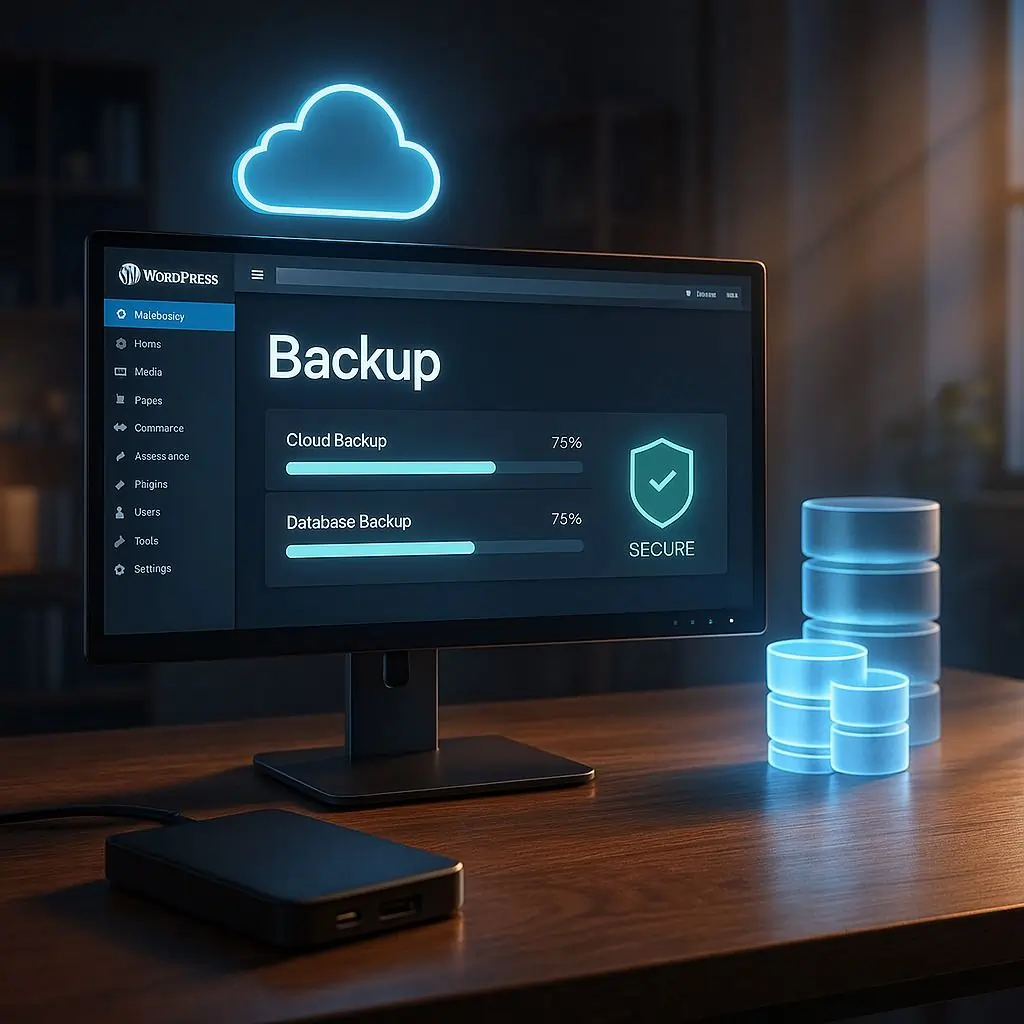
Backup, DRaaS & Business Continuity
Protect critical data. Minimize downtime. Recover with confidence.
ANSI Technologies delivers enterprise backup and disaster recovery services for organizations across the UAE, India, and GCC. We design secure, scalable, and audit-ready backup architecture for cloud, on-premise, and hybrid environments—helping businesses reduce downtime, recover faster, and strengthen resilience against ransomware, accidental deletion, hardware failure, and cyber security incidents.
From cloud backup services and disaster recovery as a service (DRaaS) to immutable backup, Microsoft 365 backup, Google Workspace backup, server backup, VM backup, and recovery runbooks, we align every solution to your recovery point objective (RPO), recovery time objective (RTO), security posture, and compliance needs.
Whether you need a fully managed IT and backup service, a secondary recovery site, ransomware-ready immutable storage, or a complete business continuity and disaster recovery plan, ANSI helps you move from reactive recovery to predictable resilience.
Why businesses invest in backup and disaster recovery now
Modern outages are no longer limited to hardware failure. Businesses now face ransomware, insider threats, cloud misconfiguration, accidental deletion, SaaS data loss, and compliance pressure. A well-architected backup and disaster recovery strategy helps organizations protect critical data, maintain business continuity, and restore operations without panic.
- Reduce downtime with tested recovery workflows and clearly defined RPO/RTO.
- Strengthen ransomware resilience with immutable and air-gapped backup copies.
- Protect Microsoft 365, Google Workspace, endpoints, file servers, virtual machines, and databases.
- Improve audit readiness with recovery evidence, logs, reports, and scheduled testing.
- Support branch offices, remote workforce environments, and hybrid cloud workloads.
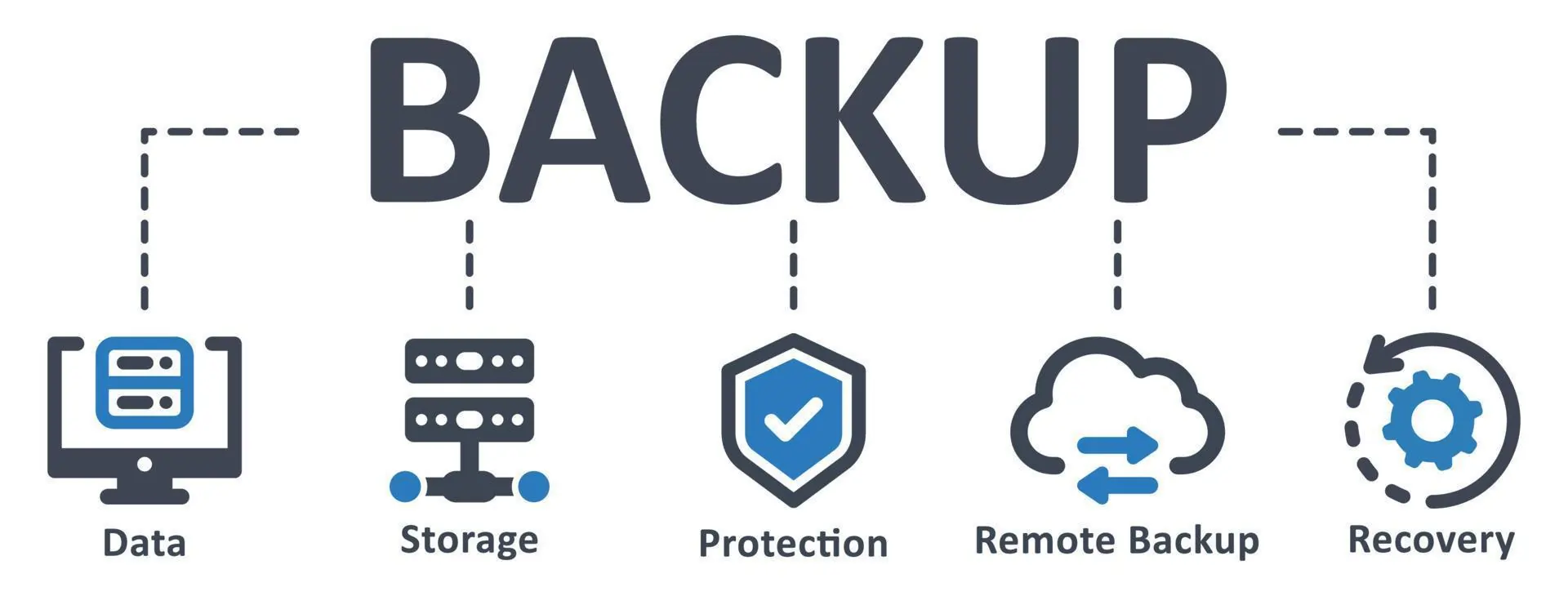
Backup, DR and Managed IT Buyer Tools for UAE Companies
A strong backup and disaster recovery project starts before tool selection. Use these ANSI resources to benchmark pricing, harden Microsoft 365, prepare for VAPT, define IT support requirements, and validate whether your recovery plan is actually business-ready.
Backup and Disaster Recovery Checklist
Start here if you need to check restore readiness, ransomware resilience, retention, immutability, RPO, RTO and DR testing discipline.
Microsoft 365 Security Checklist
Email, Teams, SharePoint and OneDrive are often business-critical. Use this checklist before relying on native retention alone.
VAPT Readiness Checklist for Dubai
Recovery is only one side of resilience. Use this checklist to identify exploitable weaknesses before they become business continuity incidents.
UAE Managed IT Services Pricing Guide 2026
Compare managed IT pricing factors such as endpoint count, SLA coverage, backup monitoring, security tooling, onsite support and monthly governance.
IT Support RFP Template for SMEs
Use this template to ask backup, DR, escalation, monitoring, cyber security and service desk questions before signing an IT support contract.
How these resources support your Backup & DR project
The checklist identifies recovery gaps, the Microsoft 365 checklist protects collaboration data, the VAPT checklist reduces breach probability, the managed IT pricing guide helps compare support models, and the RFP template helps procurement ask the right operational questions. Together they turn backup from a tool purchase into a measurable business continuity program.
Need ANSI to assess your current backup posture?
We can review your backup jobs, restore success, Microsoft 365 coverage, ransomware readiness, cloud retention and DR runbooks.
- Backup health check
- RPO/RTO workshop
- Restore test plan
- DR improvement roadmap
RPO / RTO Planning Matrix for Backup and DR
The right backup architecture depends on business criticality. ANSI helps classify workloads before recommending cloud backup, DRaaS, immutable storage, replication or restore-only protection.
| Workload tier | Typical examples | Recovery target | Recommended protection pattern |
|---|---|---|---|
| Tier 1 - Critical | ERP, finance, customer-facing apps, production databases | Low RPO / low RTO | Replication, immutable backup, DR runbook, scheduled failover testing and executive escalation. |
| Tier 2 - Important | File servers, CRM, HRMS, collaboration platforms, branch systems | Moderate RPO / same-day recovery | Managed backup, point-in-time restore, monitoring alerts and quarterly restore validation. |
| Tier 3 - Standard | Archives, old project folders, non-critical internal systems | Longer restore window | Cost-optimized backup, retention policies, lifecycle rules and periodic sample restore checks. |
| SaaS and endpoint data | Microsoft 365, Google Workspace, laptops, remote workers | Granular restore and deletion recovery | SaaS backup, endpoint backup, access controls, MFA and documented user recovery procedures. |
Our Backup & Disaster Recovery Services
End-to-end data protection, disaster recovery, cloud backup, and business continuity solutions for growing and enterprise environments.
Managed Backup Services
Centralized backup policy design, scheduling, alerting, retention management, and SLA reporting for servers, endpoints, VMs, databases, and business applications.
DRaaS / Disaster Recovery as a Service
Cloud or secondary-site replication, automated failover and failback, runbooks, network mapping, and disaster recovery orchestration for critical workloads.
Immutable & Air-Gapped Backup
Ransomware-resilient architecture using immutable storage, isolated copies, secure retention policies, and controlled recovery paths.
Microsoft 365 & Google Workspace Backup
Protect Exchange, Outlook, Teams, SharePoint, OneDrive, Gmail, Drive, and shared collaboration data with granular and point-in-time restores.
Server, VM & Database Backup
Application-aware protection for physical servers, VMware, Hyper-V, SQL, Oracle, file servers, and other critical business systems.
Ransomware Recovery Services
Recovery planning, clean restore validation, post-incident recovery assistance, and guided restoration of production workloads.
Endpoint & Remote User Backup
Protect laptops, remote users, branch offices, and distributed teams with bandwidth-aware backup and self-service recovery options.
Disaster Recovery Testing
Routine restore validation, failover simulations, quarterly test cycles, and audit-ready evidence packs to prove recoverability.
BCP / DR Planning & Runbooks
Business continuity and disaster recovery planning, workload tiering, communication trees, escalation paths, and detailed recovery procedures.
Backup and disaster recovery solutions for cloud, on-premise, and hybrid environments
Every organization has a different recovery profile. Some need rapid cloud failover for customer-facing applications. Others need long-retention backup for compliance, secure archive, or database recovery. ANSI Technologies designs hybrid backup and disaster recovery solutions that fit your environment—whether that means on-premise backup appliances, cloud backup storage, secondary-site replication, or a multi-layered recovery architecture.
Our team supports backup and recovery use cases for ERP systems, CRM platforms, databases, file servers, Microsoft 365, Google Workspace, endpoints, branch offices, and virtualized infrastructure. We focus on recoverability, security, and operational simplicity so your IT team can restore services when it matters most.
Popular solution use cases
- Cloud backup services for businesses in Dubai, Abu Dhabi, Sharjah, and across UAE
- Backup and disaster recovery services for companies in India
- Microsoft 365 backup and Google Workspace backup for growing businesses
- Ransomware-proof backup strategy with immutable storage
- DRaaS for critical applications with low RPO and low RTO requirements
- Managed server backup, VM backup, endpoint backup, and database recovery
Our Backup & DR Delivery Framework

1. Assess
Discover workloads, dependencies, risks, and current backup gaps.
2. Define
Set RPO, RTO, retention, compliance, and recovery priorities.
3. Architect
Design backup, replication, security, storage, and recovery workflows.
4. Protect
Implement encrypted backups, immutability, monitoring, and alerting.
5. Recover
Validate restore paths, failover plans, and clean recovery scenarios.
6. Improve
Run quarterly tests, optimize cost, and continuously improve resilience.
Industries We Support
Backup and disaster recovery solutions tailored for operational continuity, compliance, and rapid recovery.
Healthcare
Protect patient systems, imaging data, and operational records with controlled retention and secure recovery.
Manufacturing
Reduce disruption to production systems, file servers, ERP environments, and plant operations.
Retail & E-Commerce
Protect POS, inventory, order management, cloud workloads, and business-critical customer data.
Professional Services
Secure collaboration platforms, email, document storage, laptops, and customer-facing systems.
Why ANSI Technologies
Business-led design
We align backup and DR architecture to business continuity goals, not just storage consumption.
Hybrid expertise
Cloud, on-premise, branch, endpoint, and SaaS protection under one coordinated recovery strategy.
Ransomware resilience
Immutable backup, recovery controls, and repeatable restoration workflows built for real incidents.
Testing & evidence
We help prove recoverability with reports, screenshots, logs, and structured disaster recovery testing.
Need a stronger backup and disaster recovery strategy?
Talk to ANSI Technologies about cloud backup, disaster recovery planning, DRaaS, ransomware recovery, Microsoft 365 backup, hybrid backup architecture, and business continuity solutions for your organization.
Book a ConsultationOur Partners




Backup & Disaster Recovery Frequently Asked Questions
What is the difference between backup and disaster recovery? +
Backup protects restorable copies of data, while disaster recovery covers the broader process of restoring applications, infrastructure, identity, and operations after an incident.
What are RPO and RTO? +
RPO defines acceptable data loss in time, and RTO defines acceptable downtime. These targets guide backup frequency, replication strategy, and restore design.
How do immutable backups help with ransomware recovery? +
Immutable backups cannot be altered or deleted during the retention period, giving your team a clean recovery point even if attackers compromise production systems.
Do you back up Microsoft 365 and Google Workspace? +
Yes. We protect email, files, Teams, SharePoint, OneDrive, Gmail, Drive, and other collaboration data with granular restore options.
Do you offer cloud backup and hybrid backup solutions? +
Yes. ANSI delivers cloud, on-premise, and hybrid backup solutions depending on recovery objectives, security requirements, and infrastructure design.
What workloads can you protect? +
We protect servers, virtual machines, databases, file shares, Microsoft 365, Google Workspace, endpoints, and selected business applications.
Can backup data be retained in UAE or India? +
Yes. We can architect backup and DR environments to align with preferred regions, private infrastructure, or data residency considerations.
How often should we test disaster recovery? +
At least quarterly or whenever major systems change. Testing helps validate runbooks, recovery order, access controls, and restore success.
How is pricing calculated? +
Pricing typically depends on protected capacity, retention duration, workload type, replication requirements, testing scope, and target RPO/RTO.
How fast can you implement a backup and DR solution? +
Critical environments can often be onboarded quickly after assessment. Final timelines depend on workload complexity, storage design, security, and DR requirements.
Do you provide failover and failback services? +
Yes. We design and manage failover and failback workflows for selected workloads as part of DRaaS and disaster recovery planning engagements.
Is this suitable for SMBs as well as enterprises? +
Yes. We tailor backup and disaster recovery solutions for small businesses, mid-sized companies, and large enterprises based on budget, risk profile, and recovery expectations.
Which backup and DR checklist should our team use first? +
Start with the Backup and Disaster Recovery Checklist for UAE Companies to map business-critical systems, RPO, RTO, retention, restore testing and ransomware recovery gaps before choosing tools.
Can ANSI combine backup, cybersecurity, VAPT and managed IT into one resilience program? +
Yes. ANSI can combine backup and DR, managed IT services, cybersecurity controls, VAPT readiness, cloud operations and data protection into one practical resilience roadmap.