
How to Choose an Odoo Implementation Partner: A Practical Evaluation Framework
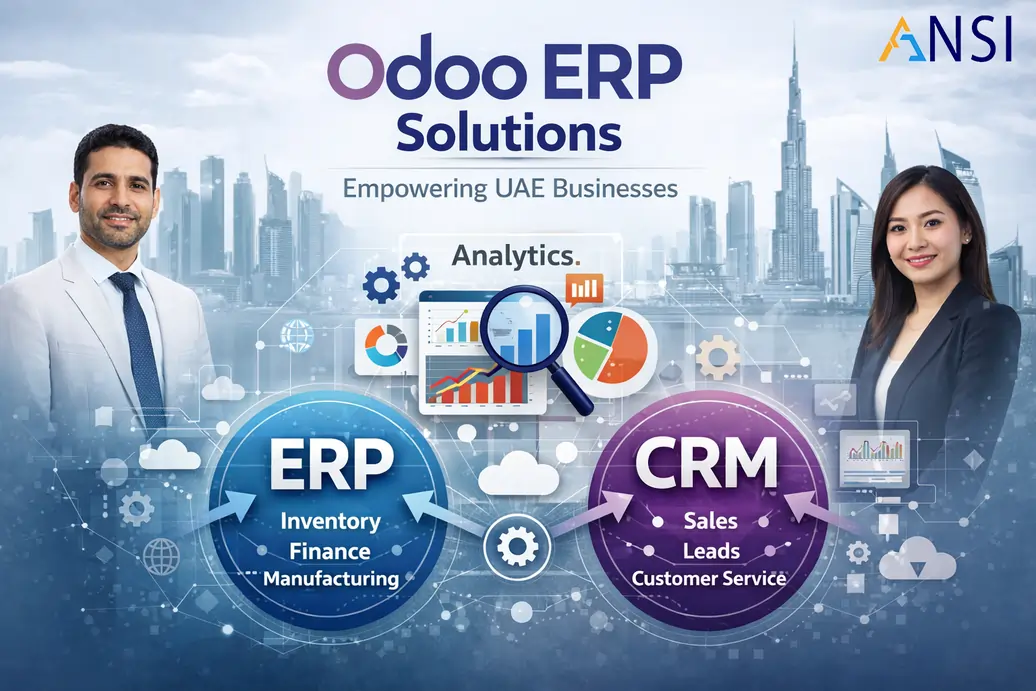
The right Odoo partner does more than install apps. The partner should understand business workflows, data, reporting, users, integrations and long-term support.
This framework helps leadership teams compare Odoo providers in a practical way before signing a proposal.
Choosing an Odoo implementation partner is one of the most important decisions in an ERP project. The software may be capable, but the outcome depends heavily on discovery quality, configuration discipline, migration planning, customization control and user adoption. A weak partner can turn a flexible platform into a confusing system. A strong partner helps the business make clear decisions and launch with confidence.
Businesses in UAE and India often compare providers based on price, demo screens or speed promises. Those factors matter, but they are not enough. The best evaluation looks at how the partner thinks, not only what they sell. If the partner cannot explain workflow ownership, data cleanup, reporting design and post-go-live support, the project may struggle even if the proposal looks attractive. ANSI Technologies supports organizations through structured Odoo Solution Services where business process clarity comes before configuration.
Discovery quality
The partner should ask strong questions about workflows, exceptions, reporting and accountability.
Delivery governance
Scope, milestones, testing and signoffs should be visible before the project begins.
Support commitment
Go-live support and continuous improvement should be part of the model, not an afterthought.
Start by checking how the partner runs discovery
A credible Odoo partner will not jump directly into module setup. They will first understand how the business works today and what needs to improve. Discovery should include interviews, real transaction samples, reports, approval flows, pain points and integration dependencies. The partner should ask about sales, purchasing, inventory, accounting, projects, service, user roles and management reporting.
If the discovery feels generic, the implementation may become generic too. The partner should be able to explain what will be standard configuration, what may need Odoo customization services and what should be deferred. This protects the business from uncontrolled development and unclear scope.
Questions that reveal partner maturity
- How will you document our current and future workflows?
- How do you decide between configuration and customization?
- How will you validate migrated data before go-live?
- What testing scenarios will business users perform?
- How will issues be managed during the first month after launch?
- What reports will leadership review to confirm the rollout is working?
Compare proposals beyond price
A low-cost proposal can look attractive, but ERP risk is often hidden in what is not included. Data migration may be vague. Training may be limited. Integrations may be estimated without mapping. Customization may be priced later. Post-go-live support may be missing. These gaps can increase cost after the project begins.
A stronger proposal explains assumptions clearly. It separates discovery, configuration, migration, customization, testing, training and support. It also states what is out of scope. This helps management compare proposals fairly and reduces surprises.
| Evaluation area | Weak proposal signal | Stronger proposal signal |
|---|---|---|
| Scope | Broad module list with little process detail. | Workflow-based scope with assumptions and exclusions. |
| Migration | Only says data import is included. | Defines data objects, templates, validation and ownership. |
| Customization | Promises anything can be customized. | Requires approval, business reason, testing and support path. |
| Support | Ends responsibility at go-live. | Includes stabilization, issue triage and improvement planning. |
Check whether the partner understands your industry reality
Industry understanding does not mean the partner must have a ready-made answer for every situation. It means they understand the operational pressures common in your business. Trading companies need inventory, pricing, purchase, sales and finance control. Service companies need project, timesheet, ticket and billing visibility. Retail and distribution businesses need stock movement, branch control and possible POS or e-commerce integration. Manufacturing companies need bill of materials, planning, work orders and costing discipline.
The partner should be able to discuss real scenarios and tradeoffs. They should explain where Odoo standard functionality fits and where process simplification may be better than customization. They should also be honest if a requirement belongs in a later phase.
Evaluate support after the first launch
The first go-live is not the end of an ERP project. It is the beginning of daily usage. Users will raise issues, reports may need refinement, approvals may need tuning and some workflows may need small improvements. A good partner has a structured model for Odoo maintenance and support after launch.
Support should include issue prioritization, response ownership, recurring review meetings and change governance. The partner should separate bugs, training gaps, process clarifications, data corrections and enhancement requests. Without this structure, every issue becomes urgent and users lose confidence.
Training capability should influence partner choice
Training is often underestimated. A partner may be technically capable but weak at explaining workflows to real users. The best Odoo partner can train by role: sales, finance, warehouse, operations, service, projects, managers and administrators. Users should practice real transactions, not just watch screen demonstrations.
For businesses that want better adoption, Odoo training and adoption should be discussed before the contract is signed. Training should include launch support, user guides, super-user enablement and manager dashboards.
Consider the wider technology landscape
Odoo may depend on hosting, integrations, email, document storage, backups, access control and endpoint readiness. A partner that understands the wider environment can coordinate better with IT teams. For business-critical ERP operations, companies should also consider cloud solutions, managed IT services and backup and disaster recovery planning as part of the overall rollout readiness.
If the project is large, complex or vendor-heavy, executive oversight through CTO as a Service can help leadership validate scope, architecture and risk before implementation begins.
Build a partner scorecard before final negotiation
A scorecard helps leadership avoid emotional vendor selection. Each shortlisted partner can be evaluated on discovery approach, industry understanding, data migration plan, customization discipline, training model, reporting capability, support structure and communication quality. The scorecard does not need to be complicated, but it should force the same questions across all providers.
During final negotiation, ask the partner to explain how the first month will work. Who will manage issues? How will urgent blockers be handled? How will user questions be separated from enhancement requests? How will data corrections be validated? How will management know whether the project is on track? A strong partner will answer these questions clearly and will not hide behind generic statements.
The scorecard should also include cultural fit. An Odoo partner must communicate with business users, not only IT teams. They should be comfortable challenging unclear requirements respectfully and explaining technical tradeoffs in language that finance, operations and leadership teams can understand.
Red flags that should pause partner selection
Some warning signs should make leadership slow down before signing. Be careful if the provider promises a very fast launch without reviewing data, if every requirement is treated as easy customization, if training is limited to a short demo, if reporting is not discussed until the end or if post-launch support is vague. These signs do not always mean the provider is poor, but they indicate risk that should be clarified.
Another red flag is a proposal that focuses only on modules and not on outcomes. A business does not need purchase, inventory and accounting screens in isolation. It needs purchase control, stock accuracy, invoice reliability and management reporting. The partner should be able to translate modules into business workflows.
Leadership should also ask who will actually work on the project. The person who gives the sales presentation may not be the person conducting discovery, configuration, migration or training. Clear roles reduce confusion after the project starts.
Finally, ask for examples of difficult decisions the partner has handled in previous projects. Their answer should show how they balance business requirements, technical limits, user adoption and long-term maintainability. This final conversation often reveals whether the provider can guide the business under pressure or only follow a task list.
Frequently asked questions
What should I look for in an Odoo implementation partner?
Look for process discovery strength, configuration knowledge, customization discipline, migration planning, training capability, support governance and clear communication with business teams.
Should the cheapest Odoo partner be selected?
Not automatically. A cheaper proposal can become expensive if discovery is weak, data migration is unclear or support after go-live is missing.
What questions should be asked before signing?
Ask about project scope, workflow ownership, data migration, customization approval, integrations, testing, training, go-live support and post-launch improvement.
Why is discovery important in partner selection?
Discovery shows whether the partner understands real business operations before proposing configuration, customization or rollout timelines.
How can ANSI Technologies support Odoo projects?
ANSI Technologies supports Odoo discovery, implementation, customization, migration, training, support and governance for growing businesses.
Need help evaluating your Odoo rollout approach?
ANSI Technologies can help you review requirements, compare implementation options and plan an Odoo rollout with stronger governance.
Request Odoo Solution Services