

Zoho CRM for Healthcare Clinics: Patient Journey, EMR and Appointment Workflow Guide
Clinics and healthcare groups need more than a contact list. They need a reliable way to manage inquiries, appointments, follow-ups, patient communication, referrals and reporting without confusing CRM activity with clinical records.
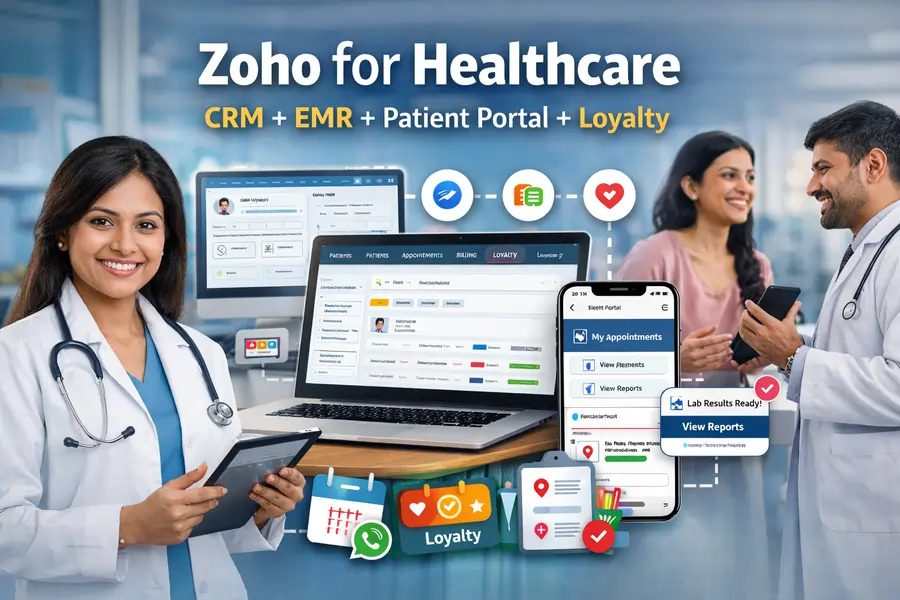
Zoho CRM can be useful for healthcare teams when it is positioned correctly. It should not replace an EMR or clinical record system. Instead, it can manage the non-clinical patient journey: first inquiry, appointment request, referral source, call follow-up, service interest, treatment package communication, feedback and retention campaigns.
This distinction matters. A clinic that tries to turn CRM into a clinical system creates risk. A clinic that uses CRM to coordinate communication, sales, service and patient experience can improve visibility without disturbing medical records. ANSI Technologies helps healthcare and service businesses design this separation through Zoho CRM consulting services and structured workflow planning.
Inquiry visibility
Track website forms, calls, WhatsApp requests, referral sources and campaign responses in one pipeline.
Appointment discipline
Use tasks, reminders and status rules so appointment requests are followed up before they go cold.
Patient experience
Improve post-visit communication, feedback, recall reminders and service package follow-up.
Start by separating clinical records from relationship workflows
The safest healthcare CRM design begins with a boundary. EMR systems hold clinical information, diagnoses, treatment records and medical history. Zoho CRM should normally manage relationship and operational information such as inquiry source, appointment interest, preferred communication channel, follow-up ownership and service engagement status.
If an integration is needed, the design should be narrow and secure. For example, CRM may receive appointment status, patient reference ID or billing status, but sensitive clinical details should remain inside the clinical system unless the business has a clear compliance and access model. When integration is required, ANSI Technologies can review the API approach through Zoho customization services and wider technology governance.
| Workflow area | What Zoho CRM should handle | What should be controlled carefully |
|---|---|---|
| New inquiries | Lead source, treatment interest, branch preference, contact owner and next task. | Duplicate records and consent for communication. |
| Appointments | Request status, reminder tasks, reschedule follow-up and no-show tracking. | Clinical notes and medical history should stay in the clinical system. |
| Care packages | Package interest, consultation outcome, quote follow-up and coordinator ownership. | Pricing approvals, discount rules and payment status visibility. |
| Retention | Recall reminders, feedback requests, post-treatment check-ins and campaign segmentation. | Frequency of communication and patient preference controls. |
Design the patient journey before adding automation
Healthcare teams often request automation too early. They want automated WhatsApp messages, appointment reminders, lead scoring and dashboards before the basic process is stable. The better sequence is to map the journey first. How does a patient inquire? Who qualifies the request? What information is required before booking? Who follows up after a missed appointment? When should feedback be requested?
Once these steps are clear, automation becomes practical. Lead assignment can be configured inside CRM. Appointment reminders can be coordinated with the booking process. Follow-up tasks can be created for care coordinators. Billing or package interest can be reviewed with finance teams through Zoho Books implementation when commercial workflows need stronger control.
Healthcare CRM readiness checklist
- Define inquiry types: consultation, treatment package, diagnostic service, referral or corporate inquiry.
- Set branch, doctor, department or service-line fields only where they help reporting.
- Agree which patient data belongs in CRM and which data must remain in the EMR.
- Document appointment statuses, missed appointment rules and reschedule responsibilities.
- Create role-based access so front office, coordinators, managers and finance see only what they need.
- Review communication templates for clarity, consent and tone before automation goes live.
Dashboards that healthcare managers actually use
A CRM dashboard should help managers answer practical questions: which campaigns bring quality inquiries, how fast teams respond, which branches have appointment backlogs, which coordinators need support, what percentage of inquiries convert to appointments, and where patients drop out. These measures are more valuable than a generic lead count.
If a clinic group also manages projects, campaigns or support workflows, related Zoho apps can be added gradually. Zoho Projects services can support internal rollout tasks, while Zoho Desk support services can manage non-clinical service requests and complaints. The goal is not to add every app; it is to make the patient journey visible and accountable.
Implementation approach for clinics with multiple teams
A healthcare CRM rollout should include front office, marketing, care coordination, branch management and finance voices. Each team touches the patient journey differently. Front office cares about appointment accuracy, marketing cares about inquiry source, coordinators care about follow-up discipline, and management cares about conversion and service quality. Bringing these teams into discovery prevents the CRM from becoming useful to only one department.
The first phase should be practical: inquiry capture, appointment follow-up, lead source reporting, coordinator tasks and basic management dashboards. Deeper EMR, billing or campaign integrations can follow after users trust the basic flow.
Patient journey fields that should be designed carefully
Healthcare teams often want to capture every possible detail in the CRM, but more fields do not automatically create better care coordination. The useful fields are the ones that help a front office executive, care coordinator, branch manager or marketing manager take action. Service interest, preferred branch, inquiry channel, preferred appointment window, referral source, consent status and next follow-up date are usually more useful than a long list of rarely maintained fields.
For management reporting, the most important design question is how the clinic wants to evaluate demand. A cosmetic clinic may review treatment category, campaign source and consultation conversion. A diagnostic center may track referral source, appointment completion and report collection follow-up. A multi-speciality group may need branch-level and department-level views. The CRM design should reflect these operating questions rather than copying a generic sales pipeline.
Access control and communication governance
Healthcare CRM users should not all see the same information. Reception teams may need inquiry and appointment context. Coordinators may need follow-up tasks. Managers may need dashboard visibility. Finance may need package or billing status. The CRM should therefore use role-based views and profiles so sensitive information is not exposed unnecessarily.
Communication governance is equally important. Templates for appointment confirmation, missed appointment follow-up, package reminders and feedback requests should be written in a professional tone. If WhatsApp or email is used, the team should know which messages are allowed, who can send them and how opt-out or consent preferences are handled. This makes the CRM more trustworthy for both patients and staff.
FAQs
Can Zoho CRM manage appointments for clinics?
It can manage appointment requests, follow-up tasks and status visibility. The actual booking calendar may remain in another system if that is already working well.
Can Zoho CRM integrate with EMR software?
It can integrate through APIs or controlled data exchange, but the scope should be carefully defined to avoid exposing clinical information unnecessarily.
Is Zoho CRM useful for multi-branch clinics?
Yes, especially when branches need shared reporting, source tracking, coordinator ownership and follow-up discipline.
How should healthcare teams start?
Start with inquiry, appointment and follow-up workflows. Add deeper integrations only after the first operating model is stable.
Related implementation support
For a wider service view, review Zoho implementation services. ANSI Technologies can connect the guidance in this article with discovery, configuration, data migration, integrations, role-wise training and post go-live support.
Need a healthcare CRM that improves patient follow-up without creating risk?
ANSI Technologies can help design a practical Zoho CRM model for inquiries, appointments, coordinators, communication and reporting.
Request Zoho CRM Services