Zoho CRM implementation in Noida for IT services, staffing and SaaS teams that need measurable sales execution
Noida companies often receive enquiries from LinkedIn, referrals, email campaigns, website forms, partner networks, repeat clients and direct calls. The real problem is not only lead generation. The bigger challenge is making sure every lead is owned, every proposal is tracked, every client conversation is recorded and every confirmed deal moves cleanly into delivery, finance and customer support.
Why Noida sales teams need a CRM designed around real enquiry types
Noida has a strong mix of IT services companies, staffing providers, software development teams, SaaS vendors, managed services firms and consulting businesses. These companies do not receive only one type of enquiry. A software development lead needs technical scoping. A staffing requirement needs role, skill, urgency, location and commercial terms. A SaaS demo request needs product fit, stakeholder mapping and trial follow-up. A support or AMC enquiry needs service history and renewal visibility.
This is why Zoho CRM should not be configured as a generic lead list. It should be designed around the way the company sells, qualifies, proposes, negotiates, hands over and reviews opportunities. If every enquiry is forced into the same pipeline, reports will look neat but management will not know where revenue is actually getting delayed.
ANSI Technologies helps Noida businesses build a CRM structure that makes sales measurable without making users feel buried under administration. The system should help sales users act faster, managers intervene earlier and owners understand which accounts, sources and proposals need attention.
Lead ownership
Every enquiry should have a source, owner, requirement type, next action and follow-up date so it does not disappear into email or WhatsApp.
Account memory
Repeat clients should show old requirements, decision contacts, active proposals, previous losses, renewal dates and relationship notes.
Proposal control
Managers should see proposal ageing, pending revisions, internal approvals, negotiation status and expected closure value.
Handover clarity
Confirmed deals should move into delivery, finance and support with enough information for execution teams to start correctly.
Separate IT services, staffing and SaaS pipelines where needed
A CRM pipeline should reflect the business model. For an IT services company, stages may include qualification, discovery, technical discussion, proposal, commercial negotiation, closure and delivery handover. For staffing, the flow may include requirement capture, candidate sourcing, profile submission, interview coordination, selection, joining and billing. For SaaS, the process may include demo, trial, stakeholder review, subscription discussion and renewal planning.
A single generic pipeline can hide important details. If a staffing deal and a SaaS subscription deal share the same fields, users will either skip fields or enter irrelevant information. The CRM should capture what matters for each enquiry type without overloading users with unnecessary questions.
A proper Zoho implementation should define these flows before configuration begins. This allows dashboards to show whether the issue is poor lead quality, slow proposal response, pricing approval delay, weak follow-up, delivery dependency or customer indecision.
Account memory is critical for repeat clients
Many Noida companies grow through repeat business. The same customer may ask for a development team today, a support contract next month and a product demo later. If the account history is not visible, the sales user starts from memory and the business loses relationship depth.
Zoho should connect accounts, contacts, opportunities, proposals, documents, activities and notes in a clean structure. A sales user should be able to open an account and understand past requirements, active discussions, key contacts, decision makers, payment behaviour, support concerns and renewal possibilities.
The CRM should also reduce duplicate customer names. Duplicate accounts damage reporting, confuse ownership and create follow-up gaps. Before migration, customer names, contact details, old leads and active opportunities should be cleaned so the team starts with reliable data.
Proposal tracking should show ageing, ownership and decision status
Revenue leakage often begins after the proposal is sent. The team may assume the customer will respond. The customer may ask for a change. A discount may wait for internal approval. A technical clarification may remain pending. After two weeks, nobody has a clear answer on whether the proposal is still active.
Zoho should make proposal ageing visible. Managers should be able to review proposals sent this week, proposals older than a defined number of days, high-value proposals without next action, proposals waiting for internal approval and proposals lost due to pricing, timing, technical fit or competition.
For Noida IT services and staffing teams, this can improve discipline quickly. A dashboard that shows proposal status and next action is more useful than a simple count of activities. The goal is not to create more reports; the goal is to protect revenue that is already in discussion.
Sales-to-delivery handover should be designed before go-live
Many customer experience problems begin after closure. Sales may win a deal, but delivery may not receive the full scope, start date, staffing requirement, milestone expectation, billing terms, customer contact or special commitment. This creates internal confusion and makes the customer feel that the company is restarting the conversation.
Zoho Projects can help structure delivery after a deal is confirmed, but the CRM must collect the right handover information before that stage. The handover should include scope summary, commercial terms, expected start date, responsible owner, delivery notes and documents needed by the project or operations team.
A good CRM handover protects both sides. Sales can show what was agreed. Delivery can start with confidence. Finance can see billing terms. Leadership can monitor whether closed deals are actually moving into execution.
Finance visibility should not wait until invoice time
For services, staffing and SaaS companies, finance visibility starts before invoicing. The finance team needs to know which deal is confirmed, what the billing terms are, when invoicing should happen, what customer reference is required and whether any commercial approval is pending.
Zoho Books can support invoice and payment visibility when CRM captures clean commercial data. The business should decide what moves from CRM to finance, which fields are mandatory, who approves commercial terms and what sales users can see after invoicing.
In many Noida companies, controlled invoice and collection visibility helps account owners support finance without giving unnecessary access to full accounting records. This is useful when customer relationships are managed by sales but payment follow-up needs business context.
Automation should reduce follow-up gaps, not irritate users
Automation is useful only when it improves behaviour. Too many reminders create noise. Too many mandatory fields slow users down. Too many approval steps push people back to spreadsheets. A smart CRM rollout uses automation carefully.
Zoho automation can help with missed follow-up reminders, proposal ageing alerts, renewal notifications, task assignment, approval routing, lead source tagging and handover triggers. Each automation should be easy to explain. If users do not understand why an alert appears, they will ignore it.
The best automation is usually simple: remind the owner before a follow-up is missed, alert the manager when a proposal is ageing, notify delivery when a deal is confirmed, and flag accounts that have gone silent. These small controls often create more value than complex workflows that nobody trusts.
Zoho One can be considered when CRM alone is not enough
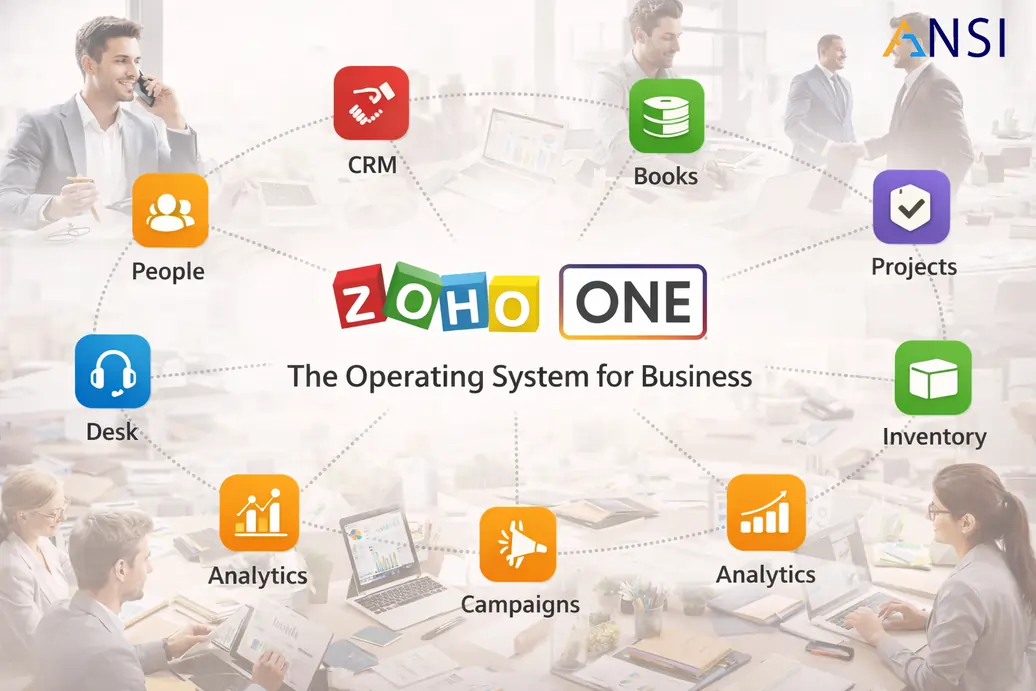
Some businesses need only CRM in the first phase. Others need CRM, Projects, Books, HRMS, support desk, forms, automation and analytics working together. In that case, Zoho One can provide a broader connected platform.
The rollout should still be phased. CRM may go live first for lead and proposal control. Books can follow for invoicing visibility. Projects can support delivery handover. HRMS can support internal people workflows. Customer support can be added when service tickets and support ownership need structure.
Zoho One should not mean launching every app at once. It should mean creating a roadmap where each app has a clear business role and adoption plan.
HR and support workflows can be added after sales control is stable
Staffing and services companies often need employee data, leave records, attendance, approvals, onboarding and internal requests after the CRM foundation is stable. Zoho HRMS can support this phase when people operations become part of the wider Zoho roadmap.
Customer service may also need structure. If clients raise post-sale issues, support requests or AMC-related tickets, Zoho Customer Support can help create better visibility around ticket ownership, response status and escalation. This is especially useful when sales, delivery and support teams all interact with the same customer.
The important point is sequencing. Sales teams should not be distracted by HRMS or support configuration if the immediate business priority is lead, proposal and account control. The roadmap should follow business pain, not app availability.
Customization should be controlled and business-owned
Zoho is flexible, but flexibility needs discipline. A Noida business may need custom fields for staffing requirements, technical stack, project type, billing model, client priority, proposal version, onboarding status or renewal risk. These fields can be useful if users maintain them and managers review them.
Zoho customization should be added only when standard configuration cannot solve the requirement cleanly. Every custom field and workflow should answer a business question. Who uses it? Who maintains it? Which report depends on it? What decision improves because this data exists?
This approach keeps the CRM useful and scalable. It prevents the system from becoming a digital version of old spreadsheets with too many columns and too little accountability.
What should be tested before go-live
A Noida Zoho CRM rollout should be accepted only after real users complete real scenarios. The purpose of testing is not to confirm that screens open. The purpose is to confirm that the team can capture enquiries, qualify them, send proposals, manage follow-ups, hand over confirmed deals and read dashboards without confusion.
Testing should include different enquiry types: IT services, staffing, SaaS demo, support renewal and repeat customer requirement. It should also include common exceptions such as duplicate account names, missed follow-ups, approval delays, proposal revisions, handover gaps and inactive accounts.
How ANSI Technologies supports Noida Zoho CRM projects
ANSI Technologies supports Zoho CRM projects with process review, pipeline design, field structure, automation planning, dashboard setup, Books and Projects alignment, data migration, training and post-go-live support. The focus is to make CRM a trusted working layer for sales execution, not just a place where users enter data after the fact.
A successful implementation should help Noida teams answer important questions quickly: which leads need action, which proposals are ageing, which accounts are active, which deals are ready for handover, which invoices need attention and which source is producing real revenue. When these answers are available inside Zoho, management meetings become more objective and follow-up becomes more disciplined.
FAQs on Zoho CRM implementation in Noida
Is Zoho CRM suitable for Noida IT services companies?
Yes. Zoho CRM can manage leads, accounts, proposals, follow-ups, sales activities, delivery handovers and management reporting for IT services companies.
Can Zoho CRM support staffing requirements?
Yes. CRM can be configured to capture client requirements, roles, skills, urgency, commercial terms, candidate follow-up stages and account ownership depending on scope.
Can Zoho CRM connect with Zoho Projects?
Yes. Closed deals or approved opportunities can be connected with Zoho Projects so delivery tasks, milestones and ownership can be structured after sales closure.
Can Zoho Books be connected for finance visibility?
Yes. Zoho Books can support invoicing and payment visibility when customer, item, commercial and billing data are properly aligned with CRM.
Should all old leads be migrated into Zoho CRM?
No. Only useful, active and relevant data should be cleaned and migrated. Old unqualified lists can reduce CRM quality and confuse users.
Can Zoho CRM help with renewals and AMC follow-up?
Yes. Renewal dates, contract details, account owner reminders and follow-up workflows can be configured to reduce missed renewals.
Does every business need Zoho One?
No. CRM may be enough for a focused sales rollout. Zoho One is useful when the company needs several connected apps such as CRM, Books, Projects, HRMS, support and automation.
What is the biggest implementation risk?
The biggest risk is creating a generic CRM that does not match the company’s enquiry types, sales stages, proposal process, handover needs and management reporting requirements.
Build a Zoho CRM rollout that your Noida team will actually use
ANSI Technologies can review your lead sources, pipeline stages, proposal process, account history, delivery handover, finance visibility and reporting expectations before configuration begins.
To avoid another disconnected sales tool, discuss your Zoho implementation roadmap with ANSI Technologies.