

Zoho HRMS Implementation Checklist for UAE Companies
Zoho HRMS works best when employee data, leave, attendance, approvals, onboarding and payroll inputs are structured before configuration. This checklist helps UAE companies prepare for a cleaner HRMS rollout.
Employee master
Define mandatory fields, reporting managers, locations, departments and document controls.
Policy logic
Map leave, attendance, shifts, holidays, probation and approval workflows.
Payroll readiness
Connect payroll inputs only after attendance and leave data are reliable.
Start with HR data ownership
A successful Zoho HRMS implementation begins with employee master data. HR should decide which fields are mandatory, who can edit them, which documents require expiry alerts and how employee changes are approved. Poor master data creates payroll errors, approval confusion and weak reporting.
For UAE companies, common fields include employment type, location, department, designation, reporting manager, joining date, visa or document records, leave policy, shift and payroll inputs.
Leave, attendance and approvals
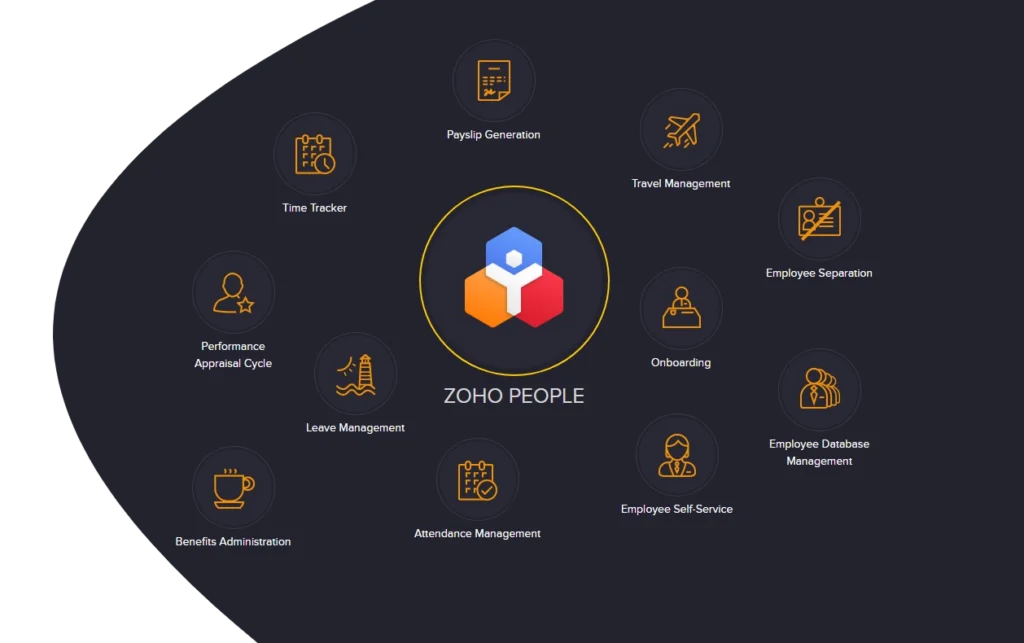
Zoho People can support leave requests, attendance regularization, approvals, employee self-service and manager dashboards. The key is to document real scenarios before setup: late marks, remote work, shift changes, public holidays, unpaid leave, overtime and manual corrections.
If the company also uses projects, finance or CRM workflows, Zoho One can connect HRMS with wider business operations in a phased roadmap.
| HR area | Decision required | Why it matters |
|---|---|---|
| Employee records | Mandatory fields and edit rights | Protects data accuracy |
| Leave | Accrual, carry-forward and approval rules | Prevents disputes |
| Attendance | Source and correction workflow | Supports payroll accuracy |
| Documents | Expiry alerts and ownership | Improves compliance control |
Implementation checklist
- Prepare a clean employee list with unique employee codes.
- Confirm departments, designations, reporting structure and locations.
- Define leave types, accrual, carry-forward and unpaid leave treatment.
- Map attendance source, correction workflow and approval hierarchy.
- Decide payroll inputs, reports and manager dashboard requirements.
- Train HR, managers and employees before go-live.
Adoption and support
HRMS adoption depends on clarity. Employees need simple self-service instructions, managers need approval visibility and HR needs exception reports. Post-go-live support should focus on fixing policy gaps, improving reports and reducing manual spreadsheet work.
Recommended next pages on ANSI Technologies
Use these pages to move from research into service scope, implementation planning and commercial discussion.
Frequently asked questions
What should be prepared before Zoho HRMS implementation?
Prepare employee master data, leave policies, attendance rules, approval hierarchy, document requirements and reporting expectations.
Can Zoho HRMS support UAE leave and attendance workflows?
Yes. Zoho HRMS can support structured leave, attendance, approvals and employee self-service when configured around company policy.
Should payroll be connected immediately?
Payroll inputs should be connected after attendance, leave and employee status data are reliable enough for payroll processing.
Implementation governance checklist for business teams
A successful Zoho rollout should have clear ownership before configuration starts. The business should identify who owns customer data, product or service masters, approval rules, finance handover, reporting definitions and user adoption. This prevents the system from becoming a collection of screens without operating discipline.
For business teams, ANSI Technologies recommends a practical phased approach: confirm the process, clean the data, configure only the workflows required for go-live, test with real examples, train users by role and review usage after launch. The same governance model can then extend into CRM, finance, inventory, support, HR and analytics as the business grows.
- Confirm process owners for sales, operations, finance and management reporting.
- Prepare clean master data before migration or import activity begins.
- Test real scenarios such as new leads, quotations, approvals, invoices, returns and service requests.
- Train users by role so daily adoption is measured and corrected early.
- Keep a post go-live support plan for workflow refinements, report corrections and new requirements.
Role-wise testing and adoption plan
Before go-live, Zoho should be tested by the people who will use it every day. Sales users should validate lead capture, follow-up discipline, quotation steps and customer history. Finance users should validate tax fields, invoice handover, payment tracking and reconciliation reports. Operations users should validate inventory, delivery, service, project or approval workflows depending on the scope.
Management should test dashboards separately. A report is useful only when the source data is trusted and the team understands how it is produced. For the implementation team, the adoption plan should include a short pilot, issue log, correction window, final user training and a post go-live review after real transactions have passed through the system.
This approach keeps the project practical. It avoids unnecessary customization, protects data quality and helps leadership see whether the platform is improving follow-up, control, turnaround time and reporting confidence.
Rollout control points before go-live
Before the final launch, ANSI Technologies recommends a simple control review for the Zoho environment. The team should confirm mandatory fields, user roles, approval routes, notification rules, dashboards, imported records and exception handling. Each item should be checked against real business examples, not only sample data.
- Review user access so each team sees only the records and actions required for their role.
- Validate duplicate control for customers, vendors, products, employees and transactions.
- Confirm reports with management before the system becomes the operating source of truth.
- Document open issues, owners and expected closure dates before go-live approval.
- Keep phase two ideas separate so the first launch remains controlled and achievable.
This final review keeps the implementation focused on business reliability. It also gives leadership confidence that users, data, workflows and reports are ready for daily operation.
Prepare Zoho HRMS correctly before configuration
ANSI Technologies can help UAE companies map HR policies, configure Zoho HRMS and support user adoption.
Explore Zoho HRMSDiscuss Zoho Implementation