Blog
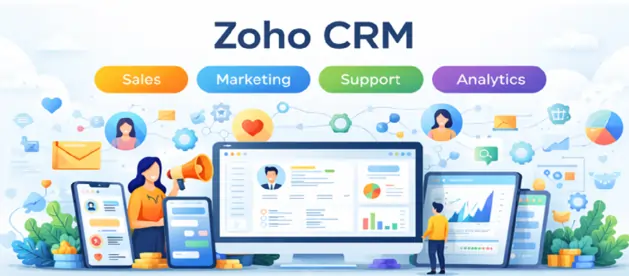
Zoho Implementation Partner in Mumbai for Sales, Finance, Collections and Customer Control
Zoho implementation in Mumbai for companies that need stronger sales follow-up, billing control and collection visibility
Mumbai businesses move fast. Leads come from referrals, WhatsApp, emails, websites, repeat customers and partner networks. The real challenge is not only getting enquiries; it is making sure every enquiry is followed up, every quote is tracked, every invoice is visible and every pending collection receives the right attention at the right time.
Why Zoho must be configured around Mumbai business reality
Many companies in Mumbai operate through long-term relationships, repeat orders, distributor networks, service commitments and high-value customer conversations. A customer may first speak to sales, then finance, then operations, and later return for another order after several months. If this history is scattered across inboxes, spreadsheets and individual memory, the business loses control even when the team is working hard.
A proper Zoho implementation in Mumbai should therefore focus on continuity. The system should show who the customer is, what was discussed, which quotation is open, what has been billed, which payment is pending, what follow-up is due and who owns the next action. This is the difference between a simple software login and a working business system.
ANSI Technologies approaches Zoho as an operating layer for sales, finance, service and management. The goal is not to add unnecessary screens. The goal is to make daily work easier, reduce missed follow-ups, improve billing readiness and give owners a dependable view of business movement.
Lead discipline
New enquiries should be captured with source, requirement, owner, priority and next action so no opportunity disappears into personal notes.
Account memory
Customer records should preserve contacts, past conversations, quotations, invoices, service issues and relationship context.
Finance handover
Approved deals should move cleanly toward invoice creation, payment tracking and collection review without duplicate data entry.
Management clarity
Owners should be able to see pipeline, overdue follow-ups, open quotes, receivables, inactive accounts and operational delays.
CRM should protect customer history, not become another contact list
A CRM is useful only when it helps the sales team act better. For many Mumbai companies, customer relationships are built over years. The same account may have several decision makers, multiple product interests, old quotations, credit history, service concerns and repeat purchase potential. If this context is not visible, the team keeps restarting conversations from memory.
A practical Zoho CRM implementation should define exactly what the sales team needs to know before calling a customer. That includes the account owner, open opportunities, last conversation, pending quote, expected value, buying stage, lost reasons, next follow-up date and commercial notes that are genuinely useful.
The CRM should not be overloaded with fields that nobody updates. Every field must have a purpose. If a sales user cannot explain why a field exists, the field will either remain blank or become unreliable. Clean CRM design is not about collecting maximum information; it is about collecting the information that improves action.
Quotation and follow-up ageing should be visible every week
In many businesses, revenue leakage happens quietly. A quotation is sent, the customer asks for a small change, the salesperson gets busy, and the opportunity becomes cold. Management may only discover this after the month is over. Zoho can reduce this loss when quotation ageing and follow-up discipline are configured properly.
The system should highlight quotes waiting for customer response, quotes waiting for internal approval, deals with no activity, high-value opportunities without next steps and accounts that have become inactive. These are not fancy reports. These are practical controls that help sales heads act before revenue is lost.
Automation should be simple and explainable. Useful workflows include missed follow-up reminders, quotation ageing alerts, discount approval notifications, renewal reminders and account inactivity reports. The best automation is not the one that looks advanced; it is the one that users understand and managers actually review.
Zoho Books connection should improve billing and collections
Sales and finance often work from different information. Sales knows the customer relationship. Finance knows the invoice status. Owners need both. When Zoho CRM and Zoho Books are aligned, the business can connect commercial activity with billing, receivables and collection responsibility.
A well-planned Zoho Books implementation should define how customers, items, taxes, invoices, payment terms, credit notes and receivables will be handled. It should also decide what the sales team can see. In many companies, controlled invoice visibility helps account owners support collections without giving unnecessary access to finance records.
Collection follow-up should respect the customer relationship. Some accounts may require finance-led reminders. Some may need the account owner to call first. Some may need automated reminders after a defined period. Zoho should support this business logic instead of forcing every customer into the same communication style.
Zoho One is useful when the business needs connected functions
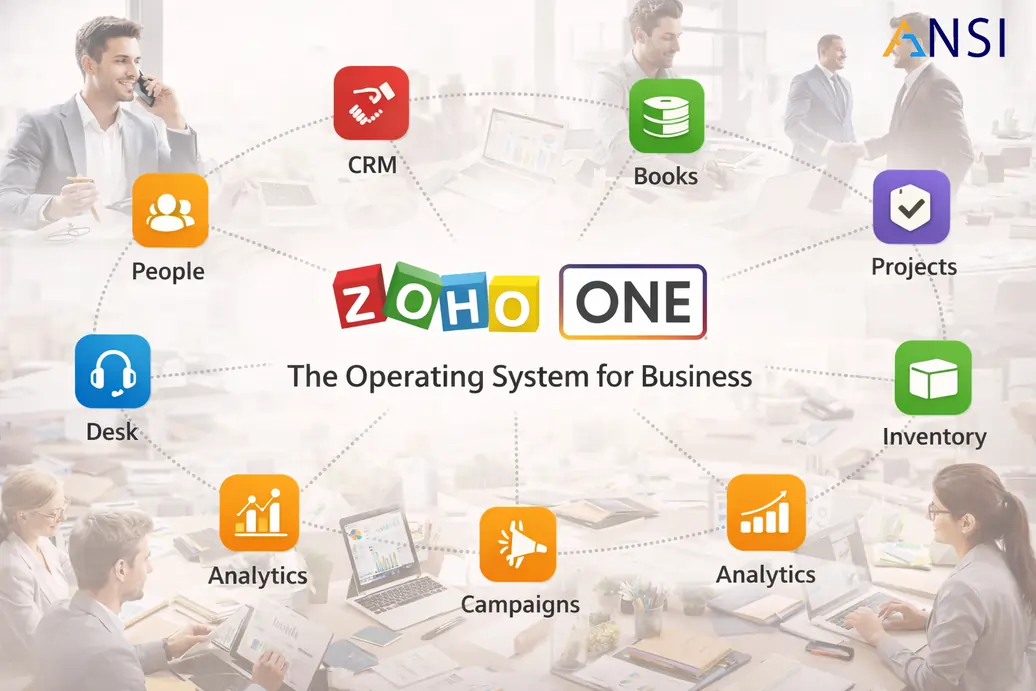
Some companies need only CRM and Books in the first phase. Others need a wider operating platform that includes helpdesk, projects, analytics, HR, approvals, forms or custom applications. In those situations, Zoho One implementation can create better value because multiple apps can work together under one roadmap.
The important point is phasing. Zoho One should not mean activating everything immediately. The first release should focus on the business areas where visibility is weakest. For example, a trading company may start with CRM, Books and dashboards. A service company may start with CRM, Projects and support tickets. A growing company may later add HRMS, approvals and analytics.
A connected Zoho platform becomes powerful when each app has a clear role. CRM should manage customer movement. Books should manage billing and finance visibility. Projects should manage delivery commitments. Analytics should help leadership read performance. Custom apps should solve gaps that standard modules cannot address cleanly.
Dashboards should answer owner-level questions
Dashboards are often built too early and too broadly. The best dashboards begin with the questions business owners ask every week. What is the open pipeline? Which quotes are ageing? Which customers have overdue invoices? Which salesperson has activities pending? Which accounts have gone silent? Which deals are blocked because of approval, pricing or documentation?
Zoho dashboards should make these questions easy to answer. A practical Zoho automation can connect CRM, Books and other Zoho apps so management can review performance from one place. But the dashboard is only as reliable as the data entry discipline behind it.
This is why reporting should be part of user adoption, not a separate technical activity. If leadership reviews Zoho reports in weekly meetings, users quickly understand that system data matters. If management continues using separate spreadsheets, users will also stop trusting the system.
Custom workflows should be added only where standard Zoho is not enough
Zoho offers strong configuration options, but every business has a few special rules. A company may need a custom approval before discounting, a special customer onboarding form, a service handover checklist, a vendor coordination screen, a renewal tracker or a management exception report. These needs should be evaluated carefully.
When standard Zoho configuration is enough, customization should be avoided. When the requirement is genuine, Zoho customization or custom workflows can help build controlled extensions. The key is to keep customization business-owned. Every custom field, form, approval and automation should have an owner and a clear reason.
Over-customization makes future support difficult. Under-customization leaves important gaps unresolved. The right implementation balance is to first use standard Zoho intelligently, then extend only where the business case is clear.
HR, projects and service can be added after the core is stable
Once CRM and finance visibility are stable, many companies expand Zoho into employee management, project delivery or service operations. This should be done with a roadmap, not as a random app activation exercise.
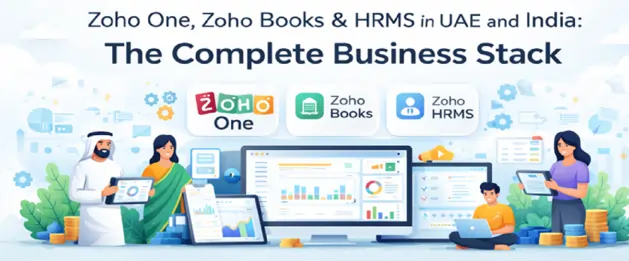
If employee records, attendance, leave, approvals and HR documents are important, Zoho HRMS implementation can be added as a separate workstream. If delivery tasks, milestones, billing dependencies or internal coordination are important, Zoho Projects implementation can help connect customer commitments with execution.
The sequence depends on business pressure. A company struggling with sales leakage should not start with HR. A company struggling with delivery delays should not stop at CRM. The roadmap should follow the pain points that affect revenue, cash flow, customer experience and management control.
Data migration must be selective and clean
Old customer data usually contains duplicates, incomplete contacts, inconsistent company names, inactive accounts and outdated phone numbers. Moving all of it into Zoho without cleanup creates confusion from day one. The migration should be selective, reviewed and approved before users start working.
The business should decide what must be migrated: active customers, open opportunities, live quotations, unpaid invoices, important contacts, service commitments and key historical references. Everything else can be archived separately if it is not required for daily action.
Good data migration also defines ownership. Who approves customer names? Who checks duplicate accounts? Who validates opening receivables? Who confirms user access? Without ownership, even a technically correct migration can fail in daily use.
What should be tested before go-live
Zoho should be accepted only when users can complete real work. The test should not be limited to opening screens. It should include actual business examples: new enquiry capture, lead assignment, quote creation, approval, customer follow-up, invoice visibility, collection update, dashboard review and management exception tracking.
Each department should test its own day-to-day flow. Sales should test enquiry to follow-up. Finance should test invoice and collection visibility. Management should test dashboards. Operations or service teams should test handover points. This confirms whether the system supports real work or only looks complete in configuration.
How ANSI Technologies supports Zoho implementation
ANSI Technologies supports businesses with process review, Zoho app selection, CRM configuration, Books alignment, workflow automation, dashboard design, data migration, user training and post-go-live support. The implementation approach is practical: understand the business process first, configure only what is needed, test with real examples and improve after users begin working.
The expected outcome is not only a configured Zoho system. The expected outcome is better control over customer follow-up, quotation movement, billing status, collection visibility and management reporting. That is where Zoho becomes valuable for Mumbai businesses.
FAQs on Zoho implementation in Mumbai
Is Zoho useful for Mumbai trading and service companies?
Yes. Zoho can support lead tracking, CRM, quotations, finance handover, invoicing visibility, collections, projects, HRMS, support and reporting depending on the business scope.
Which Zoho apps should a company start with?
Most companies start with Zoho CRM and Zoho Books when the priority is sales, billing and collections. Zoho One is useful when the business needs several connected apps under one roadmap.
Can Zoho help reduce missed follow-ups?
Yes. Follow-up reminders, activity ageing, quotation ageing, renewal alerts and inactive account reports can help sales teams reduce revenue leakage.
Can sales users see invoice status?
Yes, if the business wants that visibility. Permissions can be controlled so sales users see useful payment context without unnecessary access to full finance records.
Can existing customer data be migrated into Zoho?
Yes. Customer records, contacts, open deals, quotations and finance-related records can be migrated after cleanup, mapping and validation.
Does every company need Zoho customization?
No. Many needs can be handled with standard Zoho configuration. Customization should be used only when it solves a clear business requirement.
What dashboards should be built first?
Useful first dashboards include pipeline value, quotation ageing, overdue follow-ups, invoice status, collection exposure, inactive customers and salesperson activity.
How should Zoho go-live be planned?
Go-live should happen after users test real business flows, data is cleaned, roles are validated, dashboards are reviewed and support ownership is clear.
Plan your Zoho rollout with practical business control
ANSI Technologies can review your current sales process, customer data, finance handover, collection follow-up, reporting needs and Zoho app scope before configuration begins.
To build a Zoho system that users actually work with, discuss your Zoho implementation partner with ANSI Technologies.