Commercial process mapping
Lead, opportunity, quotation and handover journey design.
Find the right technology, specialist team, or service for your business.
ERP, CRM & business platforms
Modern workplace and intelligent platforms
Explore all Microsoft services ↗Intelligent execution at scale
Resilient, secure enterprise operations
Leadership and strategic delivery
Shape a CRM environment that supports lead conversion, customer management, service quality and reporting visibility without becoming admin-heavy and adoption-poor.

A successful CRM program depends on process design, ownership and adoption as much as on the platform itself.


Dynamics 365 CRM can provide a stronger operating backbone for business development, account management and customer service leadership.
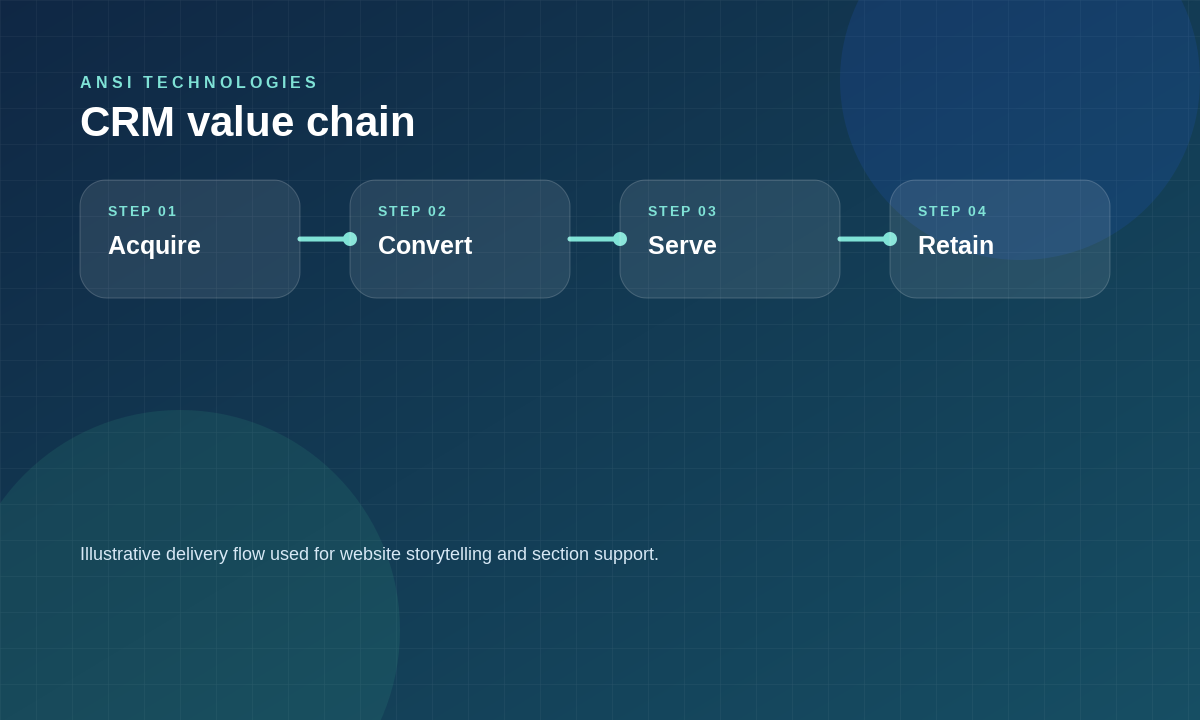
Our CRM scope is built around customer-facing execution.
Lead, opportunity, quotation and handover journey design.
Case handling, ownership, escalation and activity visibility.
Role-based access, required data and user adoption discipline.
Sales, service and performance visibility for leadership.
Every engagement should be shaped by approved business outcomes, real process conditions, available internal capacity and a controlled transition approach.
Agree scope, responsibilities, testing and acceptance before implementing changes.
Agree the expected outcomes and acceptance criteria before the engagement begins.
A documented target state for commercial and service processes.
Scope, phases, dependencies and testing direction.
Training priorities, adoption support and data ownership clarity.
Support coverage and enhancement direction after go-live.
Final deliverables always depend on the approved scope, environment access, supporting systems, project constraints and commercial agreement.
These questions are designed to support commercial clarity, internal alignment and buyer confidence.
Yes. CRM and ERP can be designed as a connected ecosystem where data, processes and reporting require it.
Yes. Adoption considerations should be built into process design, training and governance from the start.
Yes. ANSI supports cleanup, optimization, support takeover and enhancement planning.
Whether you are evaluating a new platform, improving an existing environment or looking for a more disciplined support model, ANSI can help define the next commercially sensible step.